





Get Safe and Call 911
Move away from traffic if you can and call for help. Ask for police to come to the scene so an official report is made.
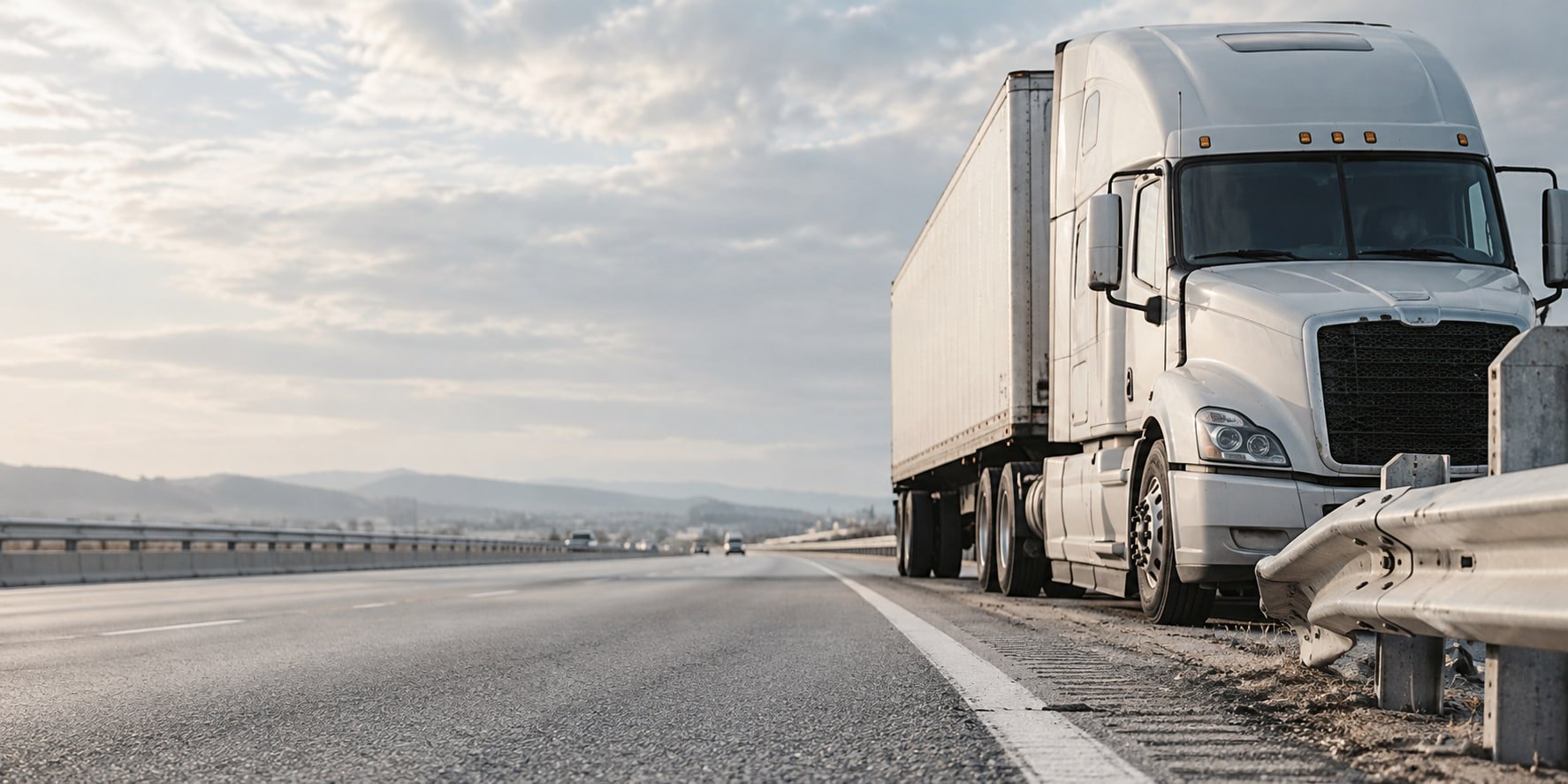
Commercial Truck & 18-Wheeler Accidents
Onx Law represents people injured in crashes with tractor-trailers, delivery trucks, and other commercial vehicles — claims that are often more complicated than a typical car accident.
(01) — Overview
Onx Law represents people injured in crashes with tractor-trailers, delivery trucks, and other commercial vehicles — claims that are often more complicated than a typical car accident.
Tractor-trailers, box trucks, and delivery vehicles are far larger and heavier than passenger cars, and the injuries they cause are often serious. You may be facing medical treatment, time away from work, and calls from a trucking company’s insurer.
We’ll evaluate your case, move quickly to preserve evidence, and identify every company that may be responsible — then put in place the strategy, legal team, and resources a case against a commercial carrier requires.
(02) — What makes it different
Trucking cases often involve federal safety rules, several companies, and much larger insurance policies than a typical car crash. The cause shapes the claim: a tired driver, a worn brake system, and an overloaded trailer each point to different evidence — and sometimes to different companies.
Trucking companies and their insurers often start investigating right away. Getting legal help early can level that field.
(03) — Evidence that matters
Electronic data, camera footage, and driver logs may be overwritten or discarded as part of routine business.
Many carriers must follow federal safety rules that limit driving hours, require most drivers who keep logs to use electronic logging devices, and require records of driver qualifications, inspections, and maintenance. Some of those records only have to be kept for a limited time, so it helps to act early.
(04) — Who may be responsible
Each company involved may carry its own insurance, so identifying every one of them matters.
A driver who was fatigued, distracted, speeding, or impaired may be responsible for the crash.
The trucking company may be responsible for its driver’s conduct, and for its own hiring, training, scheduling, and maintenance decisions.
In 2026, the U.S. Supreme Court held that federal law doesn’t bar state-law claims against a broker that negligently hires an unsafe carrier.
Cargo that was overloaded or poorly secured can shift or spill and cause a crash.
A vendor that inspected or repaired the truck’s brakes, tires, or lights may share responsibility for a failure.
A defective truck, trailer, or part may point to the company that made it.
(05) — What compensation may include
Truck crashes often cause serious, long-term injuries, and a claim should account for their full impact. Depending on the facts and the state’s law, compensation may include:
What’s available depends on the facts, the insurance involved, and the state’s law. For example, Maryland caps noneconomic damages such as pain and suffering, and Florida and New York limit pain-and-suffering claims after many motor-vehicle crashes unless an injury meets a legal threshold. No particular result can be promised.
(06) — What to do next
Move away from traffic if you can and call for help. Ask for police to come to the scene so an official report is made.
Crashes with large trucks can cause serious injuries that aren’t obvious at first. Get checked promptly and follow up on any new symptoms.
Photograph the truck, the trailer, and any company name, USDOT number, and license plates, along with the scene and road conditions.
Write down the driver’s name, employer, and insurance information, and get contact details for anyone who saw the crash.
An attorney can ask the companies involved to preserve evidence, request driver logs and maintenance records, and identify every policy that may apply.
(07) — State-specific considerations
General information, not legal advice. Laws change, exceptions apply, and how a rule affects you depends on the facts of your case.
Florida
FL
Federal trucking rules apply on Florida roads, but Florida law decides fault: if you’re found more than 50% at fault, you generally can’t recover. Most negligence lawsuits must be filed within 2 years.
Source: Fla. Stat. § 768.81(6)Maryland
MD
Contributory negligence can bar a claim if you’re found even slightly at fault, so trucking insurers often look for any mistake by the other driver. Careful evidence of what the truck driver and carrier did matters.
Source: Coleman v. Soccer Ass’n of Columbia (Md. 2013)Washington, D.C.
DC
Contributory negligence generally applies to people in cars. But pedestrians, cyclists, and motorcyclists hit by a truck can still recover unless their own negligence is greater than that of everyone they sue combined.
Source: D.C. Code § 50-2204.52New York
NY
For most motor-vehicle injury lawsuits filed on or after May 26, 2026, a person found more at fault than those they sue can’t recover. At 50% or less, the award is reduced by their share of fault.
Source: N.Y. CPLR 1411(b)(08) — The Onx approach
Every case is evaluated individually. Depending on what yours needs, Onx Law may handle the matter directly, work with co-counsel, or connect you with trusted counsel when doing so better serves your case.





Tell us what happened, in your own words — online or by phone, in English or Spanish. Every case starts with understanding the people involved.
An attorney reviews the facts, the injuries, the insurance, and the law that applies, to determine what your case actually needs.
We put the right legal team and resources around your case. Onx may handle it directly, work with co-counsel, or connect you with carefully vetted counsel whose location, experience, or resources better serve it.
Disciplined case management, data, and technology keep the work organized and moving, while legal judgment sets the strategy — and you’re kept informed along the way.
We pursue the resolution your case supports — through negotiation or, when it’s needed, in court — so you can focus on your recovery.
(09) — Questions
General information only, not legal advice. Every situation is different, so the best answer starts with a conversation.
Ask us directlyDepending on what caused the crash, responsibility may extend beyond the driver to the motor carrier, the company that loaded the cargo, a maintenance vendor, or the manufacturer of a defective truck or part. Identifying every party matters, because each may have its own insurance.
Possibly. In 2026, the U.S. Supreme Court held that a federal trucking law does not bar state-law claims against a broker that negligently hires an unsafe motor carrier. Whether that kind of claim fits your case depends on the facts and the state’s law.
Many commercial drivers and carriers must follow Federal Motor Carrier Safety Administration rules. Drivers hauling freight, for example, generally can’t drive more than 11 hours after 10 consecutive hours off duty, and most drivers who must keep logs are required to use an electronic logging device. Carriers must also check driver qualifications and inspect and maintain their vehicles. A violation doesn’t decide a case on its own, but it can be important evidence.
Key evidence may not last. Electronic data can be overwritten, video may be recorded over, and federal rules only require carriers to keep some records, such as drivers’ hours-of-service logs, for six months. An attorney can ask the companies involved to preserve evidence before it’s lost.
Often, yes. Federal rules require many for-hire trucking companies that operate across state lines to carry at least $750,000 in liability coverage — more for certain hazardous materials. Other companies involved, such as a shipper or maintenance vendor, may have their own policies as well.
(10) — More practice areas


(11) — Next step
Trucking companies and their insurers often move quickly after a crash. Getting legal guidance early can help preserve evidence, identify every party that may be responsible, and make sure your claim reflects the full impact of your injuries.